
Beth Worthy
5/25/2026



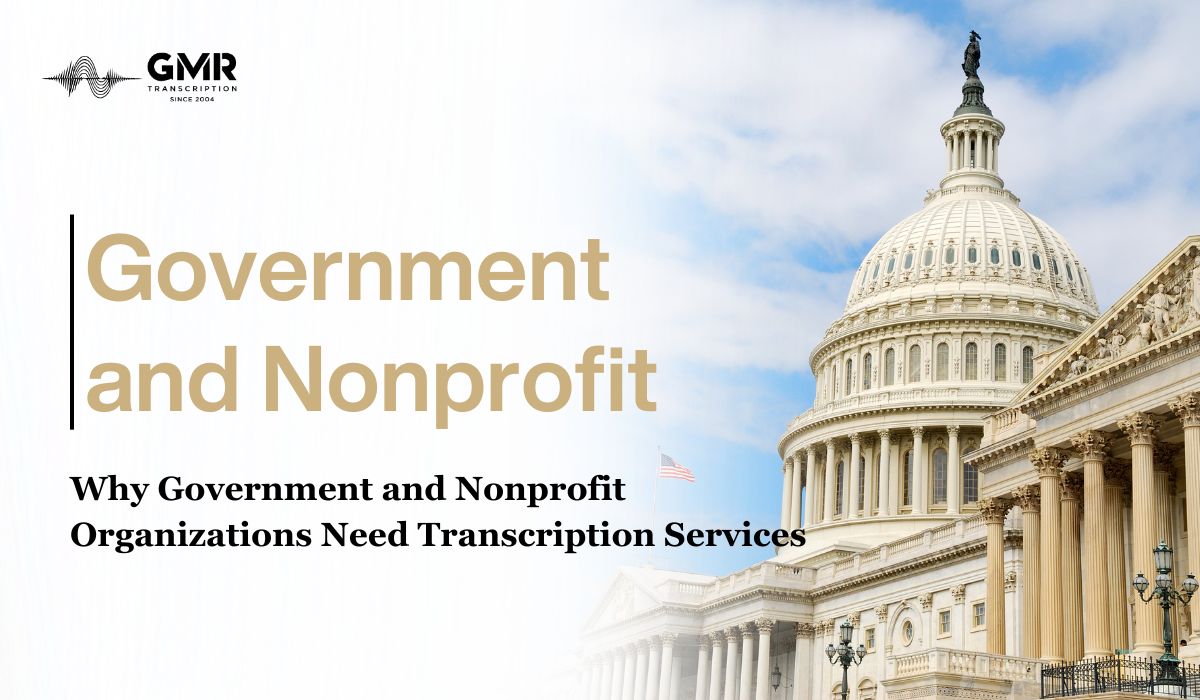
Every public meeting captures information that may be needed later.
A parent checks what was discussed at a school board meeting. A journalist searches for a quote from a city official. A nonprofit team reviews a fundraising event while preparing a grant proposal six months later. Staff seeks a policy discussion hidden in an old recording.
This happens constantly across government agencies and nonprofit organizations.
Most spoken information gets archived in audio or video files that are time-consuming to search. Reviewing hours of recorded meetings is slow and impractical.
Organizations eventually discover that storing recordings and actually using them are two completely different things.
That is one reason professional transcription services have become increasingly valuable in public sector and nonprofit environments. A professionally prepared transcript turns spoken conversations into searchable, usable information.
For organizations interested in starting, a practical next step is to evaluate their most common types of recorded content and identify where transcripts would be most helpful. This could mean piloting a transcription service with a single key meeting, public event, or educational workshop. By choosing one recurring need and assessing the results, organizations can determine the value, workflow fit, and benefits before expanding their use of transcription more broadly.
Government and nonprofit organizations now create more digital content than ever: hearings, workshops, press conferences, meetings, campaigns, educational programs, and discussions create ongoing recorded material.
Most organizations already keep years of archived recordings on servers, cloud storage platforms, or internal databases.
The issue usually appears later.
Someone needs a meeting statement from 8 months ago. A communications team seeks material from an old public event. Researchers request documentation from a policy discussion. Community members request clarification on a public announcement.
At that point, recordings become inconvenient. Manually reviewing a two-hour meeting can take hours. Important details stay buried inside media files because nobody has time to search them properly. Over time, organizations collect large amounts of technically available information that remains hard to access. Many organizations now rely on human transcription services to improve the usability and long-term value of recorded public information.
Public communication has changed significantly over the last few years. People expect information to be easier to access, search, and consume on their own schedule.
That expectation affects government agencies, educational institutions, nonprofits, and community organizations alike.
Many citizens cannot attend live public meetings because of work schedules, caregiving responsibilities, transportation limitations, or time constraints. Others rely on captions or written material because audio-only communication creates accessibility barriers.
Transcripts make information easier for everyone to use and access.
Someone who missed a town hall meeting can quickly search for discussions on transportation, zoning, education, or community safety without having to replay the entire event. Parents reviewing school board discussions can locate exact sections related to curriculum changes or district policies. Researchers and journalists can reference statements accurately instead of relying on partial notes.
Small improvements in accessibility often lead to much larger increases in public participation.
A surprising amount of local history can be found in public meetings.
City council discussions, planning board hearings, public debates, and agency announcements often document how communities evolve over time. Years later, those conversations still matter to journalists, legal professionals, researchers, students, and residents trying to understand why certain decisions were made.
Recordings preserve the event itself. Transcripts preserve usability.
People rarely choose to rewatch dozens of hours of archived footage to find a single discussion point. Organizations use written transcripts to build searchable historical records that stay useful long after the original event.
This becomes especially important during:
Clear documentation from transcripts reduces confusion, preserves institutional memory, and enables better continuity for staff and community members.
Many nonprofit organizations focus heavily on planning events, advocacy campaigns, donor outreach, and community initiatives. As soon as the event ends, they immediately shift attention to the next project. Meanwhile, valuable information gets buried inside recordings that nobody revisits.
Fundraising events often contain:
That material can support future campaigns, annual reports, grant applications, newsletters, training programs, and public outreach content, while making valuable information easy to find and reuse.
Consistently documenting and transcribing events builds a library of institutional knowledge, not just a collection of forgotten recordings.
Educational workshops involve experts, educators, researchers, business leaders, and community professionals sharing insights with attendees.
Participants rarely remember every workshop detail. Many want to revisit specific sections later.
Transcripts make educational material easier to reference, distribute, quote, and repurpose, enhancing participant learning retention and staff productivity.
A workforce development workshop can later support the development of training documents. A nonprofit educational seminar can become website content or community resources. Public agencies can organize searchable learning libraries for ongoing public access.
Written material also helps people who process information better through reading than audio alone.
Government and nonprofit recordings rarely happen in controlled studio environments.
Public meetings often have overlapping speech, noise, jargon, regional accents, and bad microphones. Automated tools often struggle more than expected in environments involving overlapping speech, public discussion, technical terminology, or inconsistent audio quality. To ensure transcripts are reliable for official use, organizations can implement quality assurance by selecting vendors that offer human review or by having staff cross-check automated transcripts for accuracy. Taking these steps helps reduce errors and reassures leaders about the reliability of their documentation.
Minor transcription errors create larger problems when they affect:
People tend to notice mistakes quickly when public information is involved.
Accurate transcription is essential when organizations need documentation they can confidently publish, archive, reference, or use for compliance, legal, or accessibility reasons. At the same time, it is important to consider privacy and confidentiality when transcribing sensitive meetings or discussions. Secure transcription workflows and confidentiality standards are becoming increasingly important when handling sensitive public or organizational discussions to protect personal data and ensure that any transcripts of confidential sessions meet applicable privacy and compliance standards.
Most organizations already record important conversations. Far fewer organizations can easily retrieve useful information from those recordings later.
That gap matters more every year.
Searchable transcripts help staff move faster during research, reporting, and policy review, increasing productivity and enabling more informed decision-making.
Over time, transcripts become part of something larger: organizational memory.
The agencies and nonprofits building searchable transcript archives today are creating systems that future staff members, researchers, journalists, and community members will continue to use for years.
To maximize the value of transcripts, organizations should develop a long-term plan to archive, organize, and use these resources. By treating transcription as an ongoing investment rather than a one-time solution, leaders can ensure that important information remains accessible, usable, and integrated into their knowledge management strategies for the long term.
Organizations working with providers such as GMR Transcription are increasingly treating transcription as part of long-term knowledge management rather than simple recordkeeping.