
Beth Worthy
4/22/2026



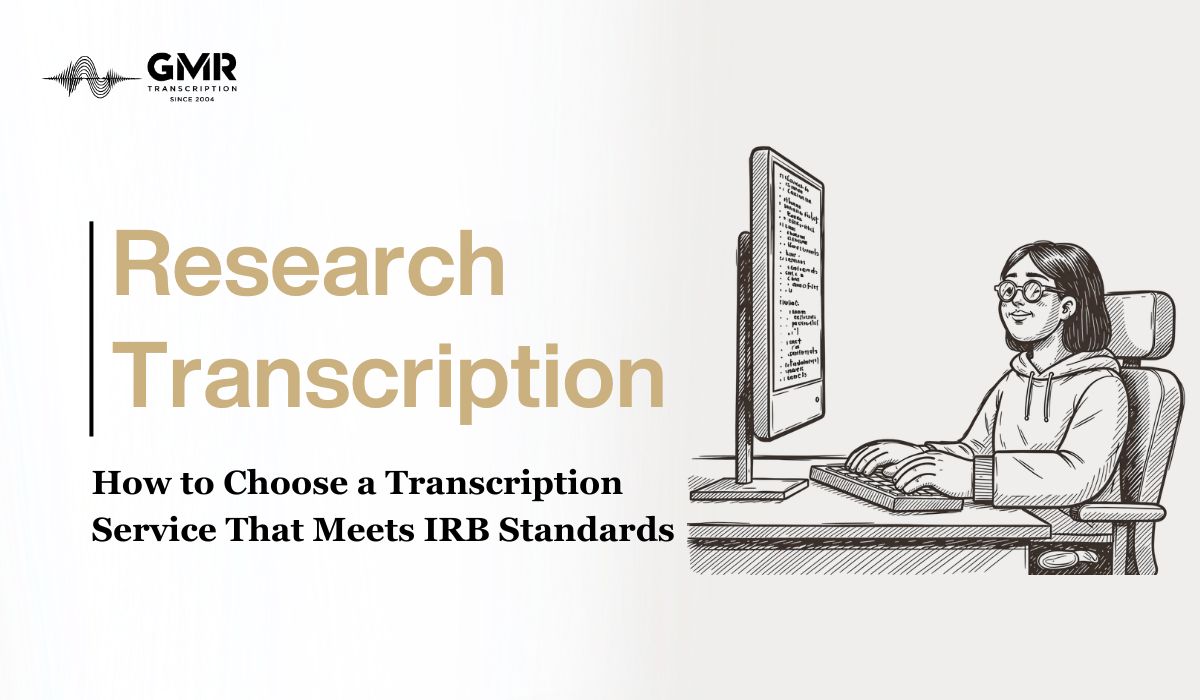
Most research teams approach transcription as a logistical step. Recordings are completed, deadlines approach, and the next task is to convert audio into text. The selection of a transcription vendor often depends on cost or turnaround time.
This approach introduces risk.
IRB approval defines how participant data is collected, used, and protected. Consent forms establish clear expectations regarding confidentiality and access. When recordings are uploaded to a transcription platform that does not meet these conditions, the research process falls out of compliance.
An IRB-compliant transcription service supports the commitments made in the research protocol. Choosing a vendor becomes a compliance decision that directly affects the integrity of human subjects research.
IRBs evaluate research through the lens of participant protection. The consent form serves as the framework for this evaluation. It defines how participant data will be handled and establishes the boundaries of its use.
Transcription intersects with several key IRB concerns.
Consent forms often specify that only the research team will access participant recordings. When audio is uploaded to an external platform, additional parties gain access to that data. If this access is not disclosed in the consent form, it introduces a protocol deviation.
IRBs increasingly require that identifiable data be stored on secure, institution-approved systems. Commercial transcription platforms may store recordings on external servers, sometimes across jurisdictions. This creates uncertainty about where participant data resides and how long it is retained.
Some transcription platforms use uploaded audio to train AI models. This introduces a secondary use of participant data that is not covered by most consent forms. Participant voices may be used beyond the original research purpose.
Talk to our team about secure, accurate legal transcription by human experts.
Many IRBs now include explicit questions about the use of AI tools in data processing. Researchers must disclose whether participant recordings will be processed through automated systems.
Failure to disclose this use creates a compliance gap. If a researcher indicates that AI tools will not be used and later uploads recordings to an AI transcription platform, the research no longer aligns with the approved protocol.
In this context, institutional review board transcription requirements are expanding to include greater transparency about data processing methods.
Selecting a transcription service that aligns with IRB standards requires a structured evaluation process. Each vendor should be assessed against clear compliance criteria before any data is shared.
Determine where recordings will be processed. Many federally funded research projects require US-based data handling. Offshore processing introduces additional regulatory considerations and may conflict with institutional policies.
Identify who will have access to participant recordings. A compliant vendor should provide clear documentation on how transcriptionists are vetted and trained. Access should be limited and controlled.
Clarify whether AI is used at any stage of transcription. If AI is involved, determine whether recordings are used to train models. This information should be documented in writing to ensure alignment with consent form commitments.
Understand how long the vendor retains uploaded files. A defined deletion process ensures that participant data is not stored beyond the necessary timeframe.
A vendor should be able to execute a Data Processing Agreement that defines how recordings will be handled. This agreement should explicitly prohibit secondary use of data and outline security measures.
Determine whether the vendor uses subcontractors. If subcontractors are involved, they must adhere to the same data protection standards.
A compliant vendor should have a clear process for handling data breaches. This includes notification timelines and mitigation procedures.
IRB approval is one part of compliance. Many institutions also require review by IT security teams. These teams evaluate whether external vendors meet institutional data governance standards.
A transcription vendor that has not undergone an IT review may introduce additional risk, even if IRB approval has been secured.
Human transcription conducted within a controlled environment simplifies compliance requirements.
A vendor that offers:
reduces the complexity of compliance.
This approach aligns more closely with consent form commitments and eliminates the need to address AI-related data usage concerns.
For human subjectsresearch transcription, simplicity in data handling often leads to stronger compliance outcomes.
Before submitting your next IRB protocol, review your consent form language related to confidentiality and data use.
If the consent form states that recordings will be used only for research purposes and accessed only by authorized personnel, your transcription vendor must be able to provide the same assurance in writing.
A signed Data Processing Agreement should be secured before any recordings are shared.
Compliance requires a structured workflow that aligns with IRB expectations.
A compliant process includes:
This workflow creates a clear audit trail. If questions arise during review or audit, researchers can demonstrate that decisions were made with compliance in mind.
IRB compliance remains the responsibility of the researcher. Every decision involving participant data must align with the approved protocol.
Selecting an IRB-compliant transcription service supports this responsibility by ensuring that data-handling practices align with consent form commitments.
GMR Transcription (GMRT) provides human transcription services designed for research environments. With US-based transcriptionists, no AI processing of participant audio, and the ability to execute Data Processing Agreements, GMRT supports compliance across academic and institutional research settings.
Preparing an IRB submission? Request information on GMRT’s IRB-compatible transcription process and ensure your research workflow aligns with human subjects requirements from the start.