
Beth Worthy
10/22/2026



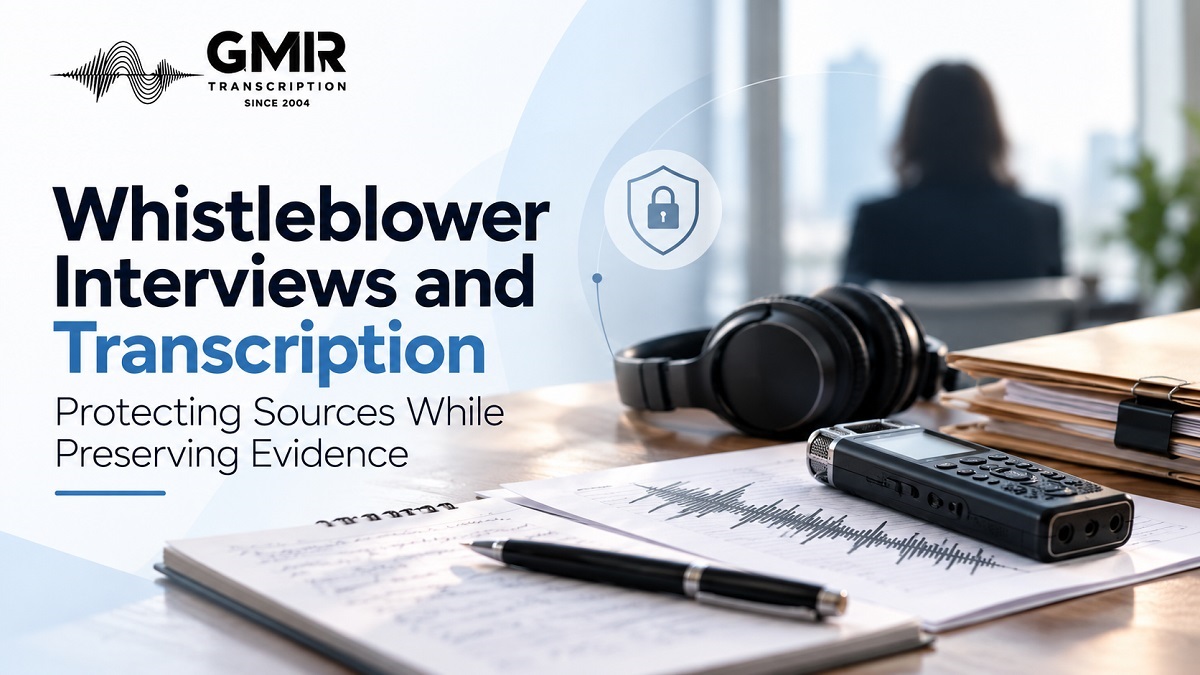
A recorded interview with a whistleblower can contain the evidence a journalist needs to verify a story, quote a source accurately, and prepare for legal review. The same recording can also reveal the source's identity through a spoken name, workplace details, background sounds, file metadata, or the voice itself. When a newsroom sends that recording to an outside transcription provider, it introduces another point where sensitive information must be handled carefully.
Secure transcription for journalists requires a workflow that protects source identity while preserving the interview's accuracy and traceability. That means limiting what you share with a vendor, setting clear handling requirements, preserving the original recording, and maintaining a transcript you can check against the audio. The Committee to Protect Journalists emphasizes assessing digital risks, protecting sensitive data, and managing information throughout an investigation. Its Digital Safety Kit provides a useful starting point for newsrooms developing these practices.
A source's identity can appear in several places beyond an interviewer's direct questions. A recording may contain the person's full name, employer, job title, department, location, or details about a particular event that make identification straightforward. Background announcements, distinctive environmental sounds, and references to colleagues can provide additional clues.
Digital files introduce another layer of exposure. Filenames, metadata, accompanying emails, project notes, and shared folder permissions can reveal information about the source or the investigation. A file named whistleblower_interview_company_finance_director.wav provides considerably more context than a neutral identifier such as Interview_017.wav.
For journalists working with sensitive interviews, investigative transcription services can turn recorded conversations into written records for review, quote verification, and documentation. Choosing a transcription provider that understands investigative requirements can help newsrooms manage recorded material more effectively.
Transcription changes how people can access this information. A recording requires someone to listen, while a transcript makes the conversation searchable, copyable, and easy to circulate through documents, shared drives, and research tools. A transcript can therefore become a concentrated source of sensitive information if its access and storage are poorly managed.
The source's voice also deserves consideration. A transcript can remove a name from the written record while still allowing colleagues or people familiar with the speaker to identify the original voice. If a newsroom plans to publish audio, use excerpts in a documentary, or share recordings with other parties, it must make separate decisions about voice anonymization and consent.
The Committee to Protect Journalists' guidance on protecting confidential sources discusses metadata, document handling, secure communication, and the identifying details that can expose a source. These considerations apply throughout the reporting process, including when an interview moves into transcription.
The first practical step is data minimization: give the transcriptionist only the material and instructions needed to complete the assignment, while limiting unnecessary identifying information.
Before sending a recording, review its filename, embedded metadata, accompanying notes, and any other material included in the transfer. Use a neutral project identifier and keep source details out of routine order notes wherever possible. If the transcriptionist needs speaker labels, consider using consistent pseudonyms such as Source A and Interviewer rather than names or job titles that reveal identities.
For example, an illustrative transcript might use the following labels:
| Original label | Pseudonymized label |
| Maria Chen, Finance Director | Source A |
| Daniel Brooks, Investigative Reporter | Interviewer |
| Regional Office, Floor 8 | Location reference, if required |
The reporter should keep the separate key linking pseudonyms to real identities. Keep that key in a restricted location under the newsroom's control, with access limited to those who need it.
Removing identifying details requires judgment. If a name or location is essential to understanding a statement, removing it from the transcription copy could reduce accuracy or obscure relevant context. Likewise, stripping metadata can affect information needed for later verification. Establish which details the vendor needs, preserve the original, and document any transformations made to the working copy.
Newsrooms can also consult the Freedom of the Press Foundation's source protection guidance, which explains how metadata and communication practices can expose relationships between journalists and sources.
A provider's security claims should translate into specific, verifiable practices. Before transferring sensitive material, establish the terms governing confidentiality, access, processing, storage, retention, and deletion.
Encrypted file transfer is one important consideration, alongside encryption at rest where applicable. Ask how access is restricted and logged, who can handle the files, where the workforce is located, whether subcontractors are involved, and what happens to the recording and transcript when the assignment is complete.
The newsroom should also ask whether any part of the work passes through automated transcription systems, third-party platforms, or tools that generate summaries and answer questions about transcript content. These services can create additional copies or processing paths, depending on their design and configuration. Evaluate each additional system against the source's threat model and the newsroom's policies.
Offshore processing deserves the same practical assessment. Workforce location can affect jurisdiction, contractual protections, access oversight, and the newsroom's ability to verify handling arrangements. Offshore providers and automated services vary in their controls, so the decision should rest on documented safeguards and the sensitivity of the assignment.
GMR Transcription's positioning centers on human transcription performed by a U.S.-based team. For highly sensitive source interviews, the newsroom should discuss the specific project's handling requirements with GMR before sending any files and confirm the applicable transfer, access, retention, deletion, and confidentiality procedures in writing. Workforce location and human review can inform the decision, while the complete handling process determines whether the arrangement fits the newsroom's requirements.
A confidentiality agreement should address permitted use, authorized access, subcontracting, disclosure obligations, incident reporting, retention periods, secure deletion, and the handling of legal requests for materials. Journalists should also establish how a vendor will respond if it receives a subpoena or another legal demand involving source material.
When recorded interviews may be used in legal review, investigations, or case documentation, transcript accuracy and consistent speaker identification become especially important. Legal transcription services can help attorneys, investigators, and legal teams document interviews, interrogations, and other recorded proceedings for review and reference. The transcript should still be checked against the original recording before important statements are quoted or relied upon.
These details matter because confidentiality depends on the whole process, from the first file transfer to the final deletion or return of the materials.
Source protection and evidentiary integrity work together when the newsroom maintains a clear separation between the original recording and its working materials.
Keep the original recording secured and unchanged. Create a working copy for transcription, record any transformations applied to that copy, and preserve information about the file's origin and handling. If the file's integrity is later challenged, a documented chain of custody and appropriate technical records can help establish how the material was managed.
The resulting transcript should retain timestamps so that quotes can be checked against the corresponding moments in the audio. If the transcriptionist marks an unintelligible passage or overlapping speech, preserve that uncertainty rather than substituting a plausible phrase. If the newsroom later redacts names or replaces speaker labels, maintain a version history that distinguishes the original transcript from the redacted working version.
A practical workflow looks like this:
This workflow lets a newsroom limit unnecessary exposure while maintaining a reliable link between the transcript and the source recording.
Legal considerations require additional care. Journalists should consult counsel about applicable shield laws, confidentiality obligations, discovery risks, and requests for source materials. These protections vary by jurisdiction and circumstance. A confidentiality agreement or a pseudonymized transcript does not automatically create legal privilege or prevent disclosure.
Before assigning a sensitive interview, confirm the following:
Newsrooms using specialized source submission systems should also keep transcription separate from the source intake process.SecureDrop's documentation explains how its system supports encrypted communication with sources and provides guidance for journalists handling submitted documents. SecureDrop is a source communication and submission tool; it does not replace the separate vendor assessment required when a newsroom sends material for transcription.
That decision depends on the material's sensitivity, the tool's data-handling practices, the newsroom's security policy, and the source's risk profile. Review whether the tool retains audio or transcript text, uses it for model training, or shares it with other providers. For high-risk material, seek a documented workflow that meets the newsroom's requirements before using an automated service.
Use neutral filenames and pseudonymous speaker labels wherever practical. Spoken names and identifying details may remain in the audio, so review the full file and determine which details the transcriptionist needs to complete the assignment accurately.
Agree on a retention period based on the assignment, contractual requirements, legal obligations, and newsroom policy. Establish how the files will be deleted and whether the vendor can confirm deletion when the retention period ends.
A transcript does not automatically receive legal privilege because it concerns a confidential source. Privilege, source protection, and disclosure obligations depend on the circumstances and applicable law. Consult counsel about the specific reporting and legal context.
A careful transcription workflow allows investigative journalists to obtain accurate quotes while limiting unnecessary exposure of sensitive material. Essential practices include minimizing what is shared, establishing verifiable handling requirements, preserving the original recording, and keeping the transcript traceable to its source.
For newsrooms evaluating confidential interview transcription, GMR Transcription can discuss a sensitive project's requirements before any files are transferred. A preliminary conversation gives the newsroom a chance to set confidentiality expectations, workforce requirements, transcript specifications, and handling questions before sharing source material.
Contact GMR Transcription about a confidential project to discuss the workflow and safeguards your newsroom requires before sending a recording.